

Articles, Design-Build Landscaping, Outdoor Living Enhancements
5 Signs Your Yard Needs a Professional Landscape Design
Aug
Not every project needs a full design plan. A single flower bed refresh or a small planting swap can often go straight to the shovel. But once a project grows in scope, skipping design usually costs more in the long run than it saves upfront.
Here are five signs it’s time to bring a professional landscape designer into your project, not just a contractor.
1. Your Project Involves More Than One Element
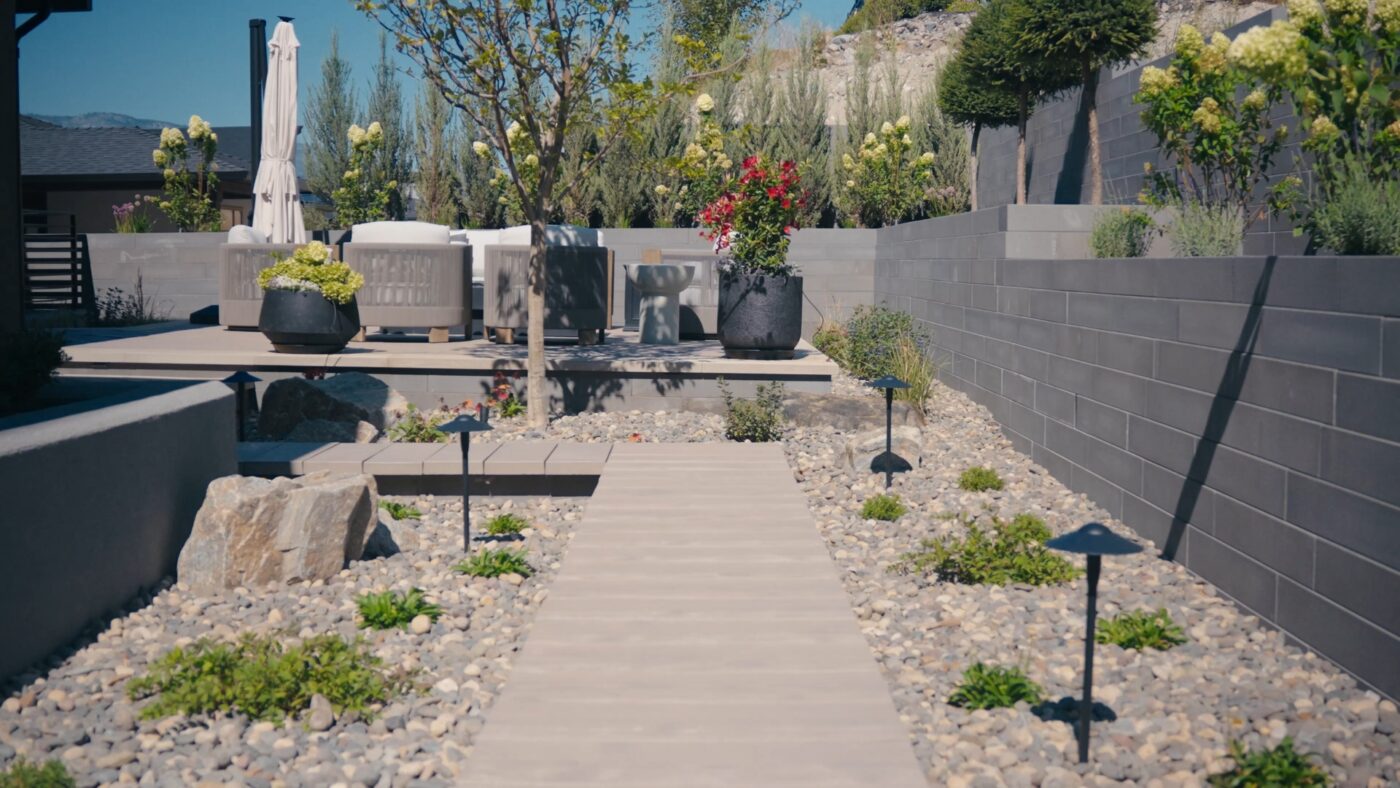
A patio on its own is simple. A patio, a pool, new plantings, lighting, and irrigation all going in together is not. When multiple elements need to work as one cohesive space, someone has to plan how they connect: sightlines, drainage paths, utility runs, and traffic flow between each area.
Without a master plan, these pieces often get built in isolation, and the seams show. A designer maps the whole property before the first shovel hits the ground, so every element supports the others instead of competing for space.
That’s also where a detailed plan, and often a 3D rendering, earns its value. Seeing how the patio, pool, and plantings actually sit together before construction starts catches flow and layout issues on screen, not after the pavers are already down.
2. Your Property Has Slope, Drainage, or Grading Challenges
Okanagan properties are rarely flat. Sloped lots, retaining walls, and drainage around a home’s foundation all carry real engineering considerations, not just aesthetic ones. Get the grading wrong and water ends up somewhere it shouldn’t, undermining a patio, a wall, or a foundation years down the road.
If your property has any grade change, lake-adjacent drainage concerns, or existing water pooling issues, that’s a strong signal a design phase is worth it. It’s far easier to solve drainage on paper than to dig up a finished hardscape to fix it later.
3. You’re Planning to Build in Phases
Many homeowners tackle their outdoor space over a few seasons rather than all at once, doing the patio this year and the pool or plantings the next. That’s a smart way to manage the investment, but it only works well if there’s a master plan guiding every phase.
Without one, each phase gets designed in a vacuum, and it becomes obvious later that they weren’t built to work together. A landscape design locks in the full vision upfront, so whatever gets built in year one still fits perfectly with what comes in year three.
4. You Want the Space to Actually Work for How You Live
Design isn’t only about how a yard looks. It’s about how it functions: where you’ll actually gather, how you’ll move between the kitchen and the outdoor dining area, which views you want framed and which neighbouring yards you’d rather screen out.
A contractor can build what’s specified. A designer figures out what should be specified in the first place, accounting for sun exposure, prevailing wind, privacy, and the way your family actually uses outdoor space throughout the seasons.
That thinking extends to plant selection too. It means choosing species suited to your yard’s sun, wind, and soil conditions, matching mature size to the space available, and grouping plants with similar water needs together so beds don’t end up overcrowded in five years or gapped and thirsty in year one.
5. You’re Making a Significant, Long-Term Investment
The bigger the project, the more expensive a mistake becomes. Rework, material waste, and “do we really need to move that?” conversations mid-build all add cost and delay that a design phase is built to prevent.
Professional design accounts for accurate material takeoffs, realistic sequencing, and a construction plan the build team can follow with confidence. It also means you get a clear budget and a realistic timeline upfront, rather than working it out phase by phase once the crew is already on site. For a premium, long-term investment in your property, that clarity is what protects the budget rather than inflating it.
The Bottom Line
Not every yard needs a full design plan, but most projects with real scope, complexity, or long-term ambition do. If your project checks two or more of the boxes above, that’s a sign design should come before build, not after.
We’ve covered why design is one of the smartest investments you can make in your yard. This is how to know if your project is one that needs it.
As a certified Techo-Pro installer with over 30 years building landscapes across Kelowna, West Kelowna, and Lake Country, Creative Roots Landscaping designs and builds properties that are made to work as one connected space, not a collection of separate projects.
Not sure if your project needs full design? Book a consultation and we’ll help you figure out the right starting point.
Frequently Asked Questions
Do I need a landscape designer for a small backyard project? Not always. Smaller, single-element projects like a planting refresh or a small patio addition can often move straight to the build phase. Design becomes valuable once a project involves multiple elements, grading challenges, or phased construction.
What’s the difference between a landscape designer and a contractor? A contractor builds to a set of specifications. A designer creates those specifications first, planning how the whole property will function, drain, and flow before construction begins.
Can I still get a design if I’m building in phases over a few years? Yes, and it’s one of the best reasons to invest in one. A master design plan keeps every future phase aligned with what’s already been built.
Is a design fee separate from construction costs?
Yes. Design is a distinct phase from the build, priced separately based on the scope and complexity of your property. Think of it as the planning investment that shapes an accurate construction budget, not part of it.
How long does the landscape design process take?
It varies with project size, but most residential designs move through a site visit, concept development, and a couple of rounds of revisions before landing on a final plan. Larger or more complex properties take longer to get right.
Does a landscape design include 3D renderings?
It can. For larger or multi-element projects, a rendering helps you see how everything, hardscape, plantings, lighting, actually comes together before construction starts, which is especially useful for visualizing pools, retaining walls, or major layout changes.